

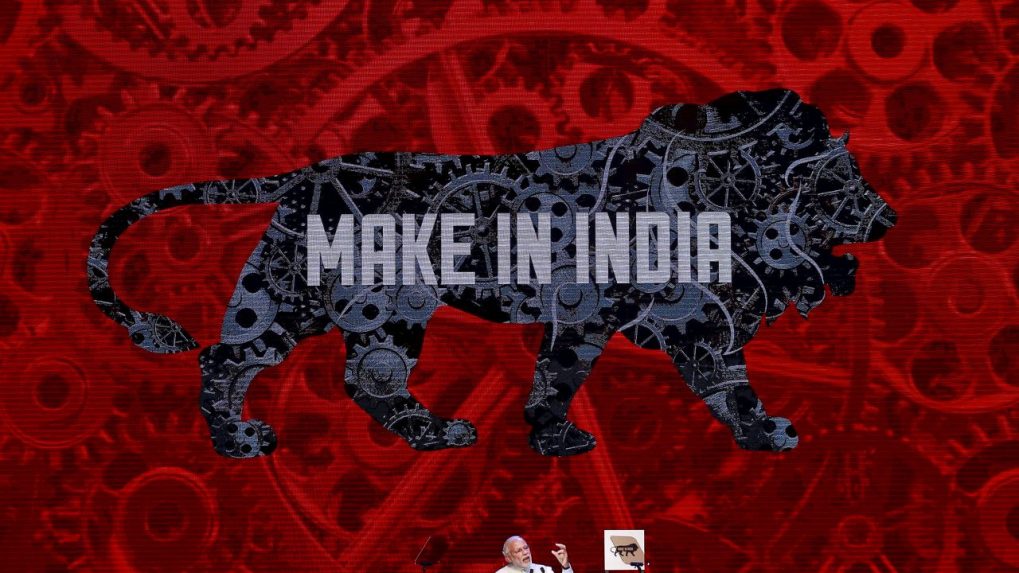
In the past decade from 2014 to 2024, India has taken its place as a Top 5 global economy, on track to soon reach third rank behind only the US and China. This formidable trajectory is also reflected in the remarkable leap forward in the Nation’s Ease of Doing Business (EoDB) rank – from 142 in 2014 to 63rd rank in 2019.
Numerous measures across multiple economic sectors have converged towards this favourable EoDB trajectory. The Goods and Services Tax Network (GSTN) unified the country’s states and UTs under one intra-national economic market system by integrating many fragmented tax systems. Heavily digitalised, the GSTN system has wielded multiple breakthroughs in making trade across the country more efficient, increasing tax collections, and decreasing supply chain costs and the overall level of taxation and prices.
India is one of the few countries worldwide investing over $1 trillion annually in the economy, government and private, combined via Gross Capital Formation. This amounts to a significant 31% of the nation’s GDP. To boost trade activities, significant investments have been made towards increasing the capacities of India’s ports, airports, freight, railways and other critical aspects of trade-related logistics. The trip from Bangalore to Delhi previously took four days, now it’s possible in two. Goods carriage speeds have exceeded 45kmph, from an average of 25kmph earlier. The Dedicated Eastern and Western Corridors for exclusive goods movement up and down the country have been a game-changer. Between GST and infrastructure development, supply chain costs are reducing from 14% of GDP to 8-9%.
Impact of ‘Make in India’
Apart from improving the physical infrastructure, measures like electronic sealing of containers, electronic submission of supporting documents with digital signatures, machine-based automated clearance of imported goods and use of handheld devices for on-the-spot clearances have been taken to improve port operations and reduce turnaround times.
Several measures to simplify the process of starting businesses have been taken to boost entrepreneurship and business expansion. Forms like SPICe+ and AGILE PRO integrate various services like PAN, TAN, DIN and GSTN into one, and are processed within two to three days. A single window for construction permits has also been introduced via OBPS.
The tax systems, both direct and indirect, have been automated and efficiency has accelerated. More than 97% of tax assessments are completed within 30 days of filing. Digitalisation has significantly increased tax collections. Digitalisation across the economy has tremendously benefitted common citizens and their productivity—like accessing birth and death certificates, and land records, and registering purchases of land and other assets.
More reforms needed
While there is tremendous progress in increasing the velocity of business and EoDB in India, addressing the following fundamental issues over the next five years will accelerate the ascent. Reforms are sorely needed in India’s justice system. Today commercial disputes take any time between 5-15 years to resolve, working its way through the courts. The system is overloaded with hardly 21 judges/million population, whereas the optimum number is between 50 and 100.
Court proceedings often drag on with frequent adjournments. Lack of judicial capacity, archaic laws (despite repealing numerous old laws), and complicated processes impede justice and EoDB. The Commercial Courts Act 2015 and Amendment in 2018 provided for increasing the number of commercial courts across all levels—district, town and state, decreasing the monetary limit of commercial disputes to include a wider number of beneficiaries, and the use of IT and digitalisation services to hasten court operations, the implementation must accelerate so commercial disputes can be settled within two and three years as in developed economies.
Unnecessary tax disputes are hurting India’s brand equity. The quantum of tax disputes has increased from ₹4.5 lakh crore in 2014 to around ₹12 lakh crore in 2023. Many of these disputes are overturned on appeal necessitating action to eliminate unnecessary high-pitch assessments. Accountability for wrong assessments and tax disputes must be increased, and broad administrative reforms must be enacted to curb any arbitrary powers.
Overall, the Indian government’s massive drive towards digitalisation, digital and financial inclusion, improvement of processes, and removal of unnecessary approvals over the past decade has paid rich dividends. India is steadily positioning itself as the world’s growth engine over the next 25-50 years. Accelerating India’s EoDB ranking is of vital importance to increase the velocity of business. Some critical measures that are required over the next five years to improve judicial capacity, decrease tax disputes and ease the flow of foreign currency in and out of the country will have an outsized impact on the EoDB in India.
—The authors, Dr TV Mohandas Pai is Chairman at Aaron Capital and former CFO and Board Member of Infosys, and Nisha Holla, is Technology Fellow, C-CAMP(Centre for Cellular & Molecular Platforms). Views expressed are personal
(Edited by : Ajay Vaishnav)
First Published: Mar 8, 2024 4:13 PM IST