

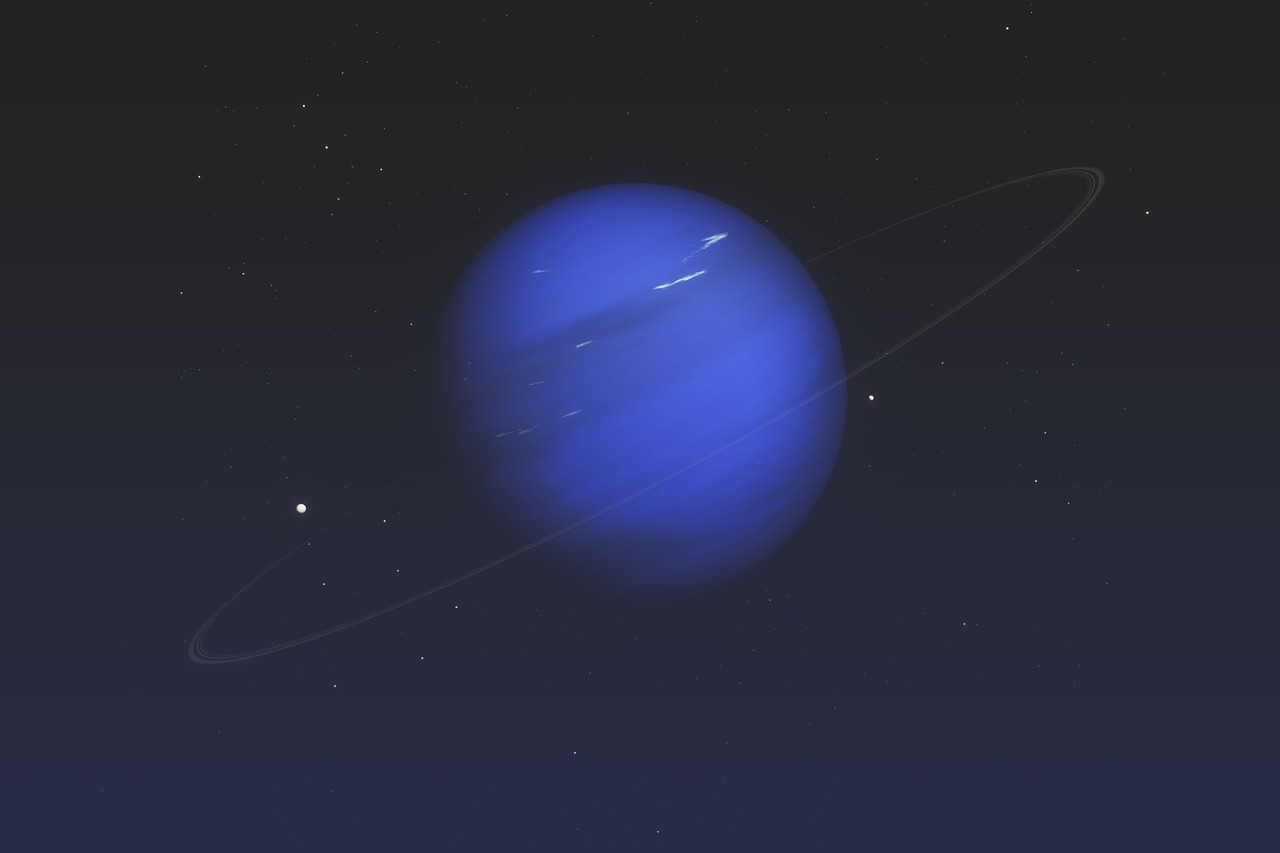
Three New Satellites Discovered Around Uranus and Neptune
Astronomers have made some exciting discoveries in the outer reaches of our solar system. Three new small satellites have been found orbiting around Neptune and Uranus, adding to the growing family of moons in our cosmic neighborhood.
The latest findings bring the total number of known satellites around Neptune to 16 and around Uranus to 28. The new satellites were spotted by astronomers using advanced telescopes and technology to scan the vast expanse of space.
In a recent discovery, astronomer Scott Sheppard of the Carnegie Institution for Science found a new satellite around Uranus using the Magellan telescopes. NASA’s Jet Propulsion Laboratory later confirmed that this new satellite is possibly the smallest of all Uranus’ moons, measuring only 8 kilometers in diameter and taking 680 days to orbit Uranus. This makes it smaller than the previous record holder, Deimos, which was approximately 13 kilometers wide.
The newly discovered satellite around Uranus is currently named S/2023 U1, but will eventually be given a name from a character in one of Shakespeare’s stories.
Moving on to Neptune, astronomers also spotted two new satellites orbiting the ice giant. One of them is 23 kilometers wide and orbits Neptune every 27 years, while the other is 14 kilometers wide and also takes 27 years to complete an orbit. The smaller moon has a very faint presence and requires special processing to be detected. These two new satellites are tentatively named S/2002 N5 and S/2021 N1, following the tradition of naming Neptune’s moons after sea gods and goddesses from Greek mythology.
All three of the newly discovered moons have peculiar egg-shaped orbits that are highly eccentric and inclined, indicating that they were likely not born around their host planets. Instead, they were likely captured by the gravitational pull of Uranus and Neptune after the planets formed. This chaotic behavior in the early solar system resulted in a diverse array of objects moving and interacting with each other.
These new discoveries not only add to our understanding of the outer planets in our solar system but also provide valuable insights into the formation and evolution of celestial bodies in space. Further studies and observations will help unravel more mysteries hidden within our cosmic backyard.
(Image Source: pixabay)