






















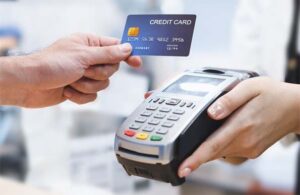
Tap-to-pay is now the default way to pay at most checkouts. Most new bank cards ship with contactless built in, and phones and watches do the same job.
That convenience comes with a familiar worry. If a card can pay from a few centimeters away, can a stranger with a reader in a crowded train read it through your pocket?
The short answer is yes, sometimes, but what they get is far less useful than most ads suggest. Here is how the technology works, where the real risks are, and what actually stops them.
How a contactless card talks to a reader
A contactless card has no battery. Inside it is a small chip and a coil antenna that runs around the edge of the card.
When you hold the card near a payment terminal, the terminal’s radio field, at 13.56 MHz, powers the chip through that coil. The chip wakes up, answers the terminal and goes back to sleep, all in a fraction of a second.
The standard behind this, called ISO 14443, is designed for a range of about 4 centimeters. That short range is deliberate, and it is the first layer of protection.
What a skimmer can actually read
In research demos, people have read cards from farther away using larger antennas and amplified readers. Even a cheap reader or an ordinary NFC phone can pull some data from a card it touches.
What comes back depends on the card, but it is usually the card number and expiry date. Most modern cards no longer share the cardholder’s name, and none of them share the CVV printed on the back.
The bigger point is the cryptogram. Every contactless payment includes a one-time code the chip generates for that transaction. A thief who records it cannot replay it, because the bank will reject a code that has already been used.
So a skimmed card cannot simply be cloned into a working copy. The leftover risk is that the number and expiry get used at online shops that do not ask for a CVV, which most now do.
The risks that are real
Card payments are the best-protected thing in most wallets. The weaker spots are elsewhere.
- Relay attacks. Two devices work as a team: one sits near your card, the other near a real terminal, and they pass the conversation between them in real time. It has been shown in labs, but it needs two people, precise timing and a nearby terminal, so it is rare in the wild.
- Older access badges. Many office and building badges still use simple proximity tech with no encryption. These are the easiest cards to copy, and a copied badge opens a door, not just a shopping cart.
- Older or low-cost cards. Some transit, hotel and loyalty cards store data with little or no protection.
- Passports. E-passports hold a chip with your photo and details. They are protected by keys printed inside the passport, which is why a closed passport is much harder to read than an open one.
What actually blocks it
Most of the protection is free and already in place. A few cheap extras close the remaining gaps.
Use your phone or watch to pay. Apple Pay and Google Pay use a device-specific token instead of your real card number, and they need your face, fingerprint or passcode. A reader cannot get anything useful from a locked phone.
Turn on alerts and card controls. Most banking apps can notify you of every transaction and let you freeze a card in seconds. Some banks also let you switch contactless off on a physical card you rarely use.
Shield what stays in your wallet. Shielding works because metal weakens the radio field a reader needs. Sleeves and RFID-blocking wallets wrap each card in a thin metal layer, so the chip never gets enough power to answer.
Blocking cards take a simpler approach. You drop one card in among the others and it covers the whole stack. Passive versions add a shielding layer, while active ones draw power from the reader’s own field and send back interference that drowns out the other cards’ replies. If you want to compare the options, this roundup of the best RFID blocking card picks looks at how each one shields, what it costs and how honest the maker is about it.
Keep badges and passports covered. An access badge in a sleeve and a passport kept closed, or in a shielded cover when you travel, removes the easiest targets.
The bottom line
Contactless payments are safer than they look, thanks to short range and one-time codes. The data a skimmer can grab from a modern bank card is limited, and your bank’s fraud protection covers the rest.
The sensible approach is layered and cheap. Pay with your phone when you can, turn on alerts, and add a sleeve or blocking card for the badges, IDs and older cards that do not protect themselves.
Matt Bernard writes about home, travel and everyday tech products at comparison.co.