
CIOs Must Strive to be Vanguards, a Cohort That Delivers Better Business Outcomes While Also Reporting High CEO-Perceived AI Value
Speaking at Gartner IT Symposium/Xpo in Orlando today, Alicia Mullery, VP Analyst at Gartner, said, “Volume is not value. AI is creating a reckoning for organizations that lack fundamental disciplines, such as defining use-case value ahead of time and establishing criteria for when to walk away.”
The Gartner 2027 CIO and Technology Executive Agenda survey of 2,002 CIOs and technology executives from May to July 2026 found that vanguards, defined as CIOs who are delivering better performance on business outcomes while also reporting high CEO-perceived AI value, are more likely to establish stopping rules at two points in the lifecycle: pilots and production. Defining these guidelines becomes essential as organizations rapidly transition from initial experimentation to active deployment across GenAI, traditional AI and AI agents.
Organizations with guidelines for determining when an AI pilot should not move to production are 2.3 times more likely to be vanguards, while those with guidelines for abandoning low-value AI initiatives already in production are 2.6 times more likely to be vanguards. However, only 31% and 17% of CIOs, respectively, reported having these practices in place.
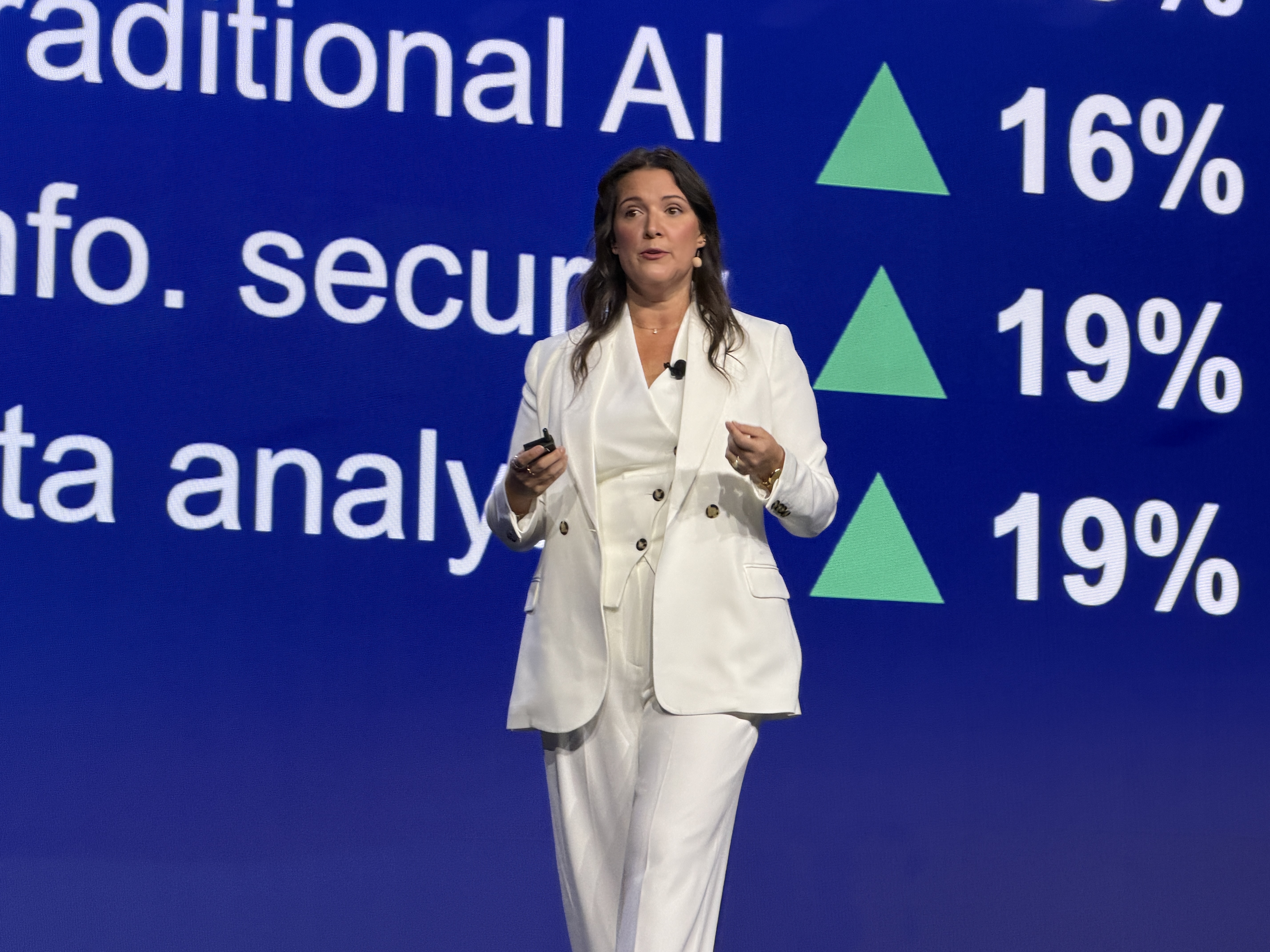
Gartner analyst Alicia Mullery on stage at Gartner IT Symposium/Xpo.
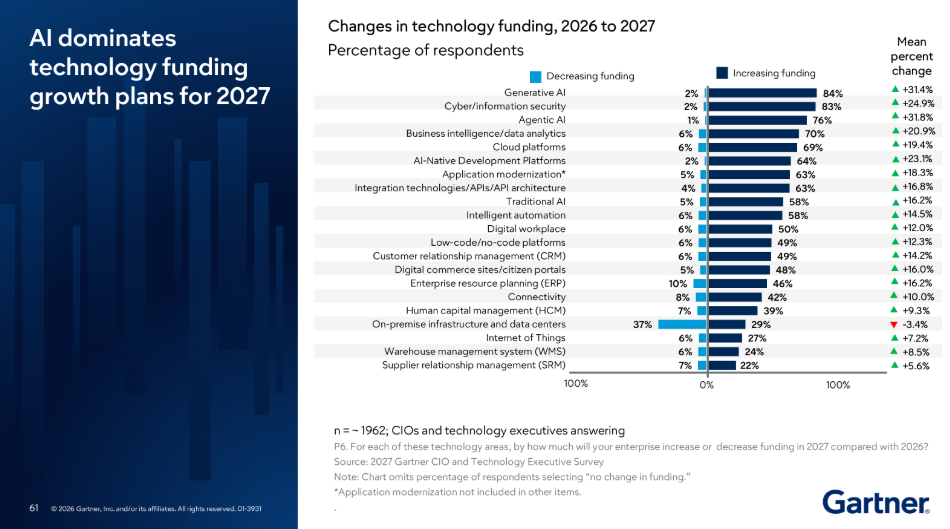
Funding for AI is increasing, and 58% of CIOs said they have increased pressure to deliver cost improvement from AI. At the same time, 51% of CIOs expected AI to increase the total cost of ownership of technology solutions (see Figure 1). CIOs need to help their organizations govern AI economics across the full lifecycle, not simply approve an initial technology purchase.
Figure 1: Changes in Technology Funding, 2026 to 2027
Organizations with explicit plans to redesign roles for a human-agent workforce are 2.4 times more likely to be vanguards, yet a significant execution gap exists, as only 4% of CIOs reported having such plans in place.
“While many leaders assume AI will primarily serve to reduce technology headcount, the true vanguard differentiator lies in workforce redesign,” said Mullery.
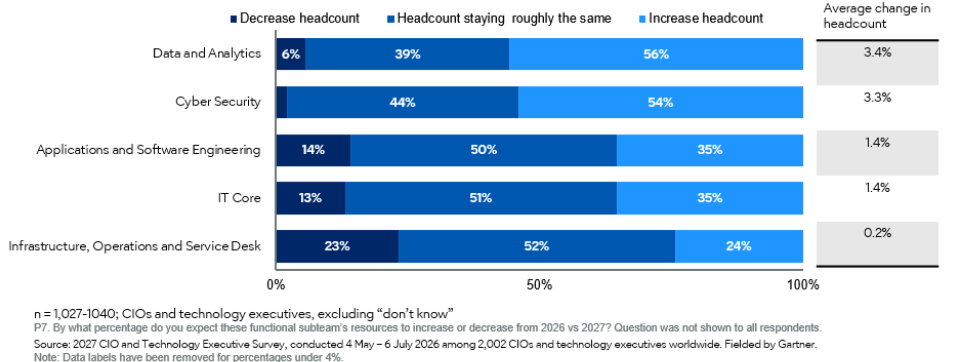
This workforce transformation provides the essential foundation for understanding headcount trends: as AI lowers the cost and effort required to produce technology, overall demand for technology work actually increases. This creates a dual workforce shift where IT headcount can grow, with 40% of respondents expecting to increase IT headcount in 2027, particularly in cybersecurity and data and analytics (see Figure 2), while roles simultaneously compress and expand.
Figure 2: Expected Changes in Headcount within IT Functional Sub-teams Within 12 Months (Percentage of Respondents)