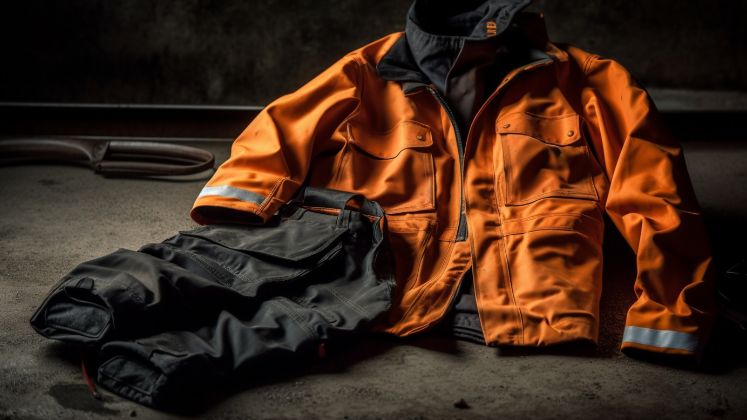
At a CAGR of 12 per cent -14 per cent, technical textiles are here to stay, thrive and grow. The sector is set to be a US $ 20-23 billion market within India and US $ 3 billion in exports. Applied in 13 industries, technical textiles in protective clothing stands out as a new and promising category that has some very useful applications in military, para-military, civil defense, oil, gas, mining and heavy industries.
While all types of clothing inherently provide some level of protection, the protective functional textiles address potential life-threatening hazards or risks, posing a danger to individuals that include heat, fire, blasts, impacts, cuts, chemical splashes and dirt.
Protective textiles for defense and civil defense services
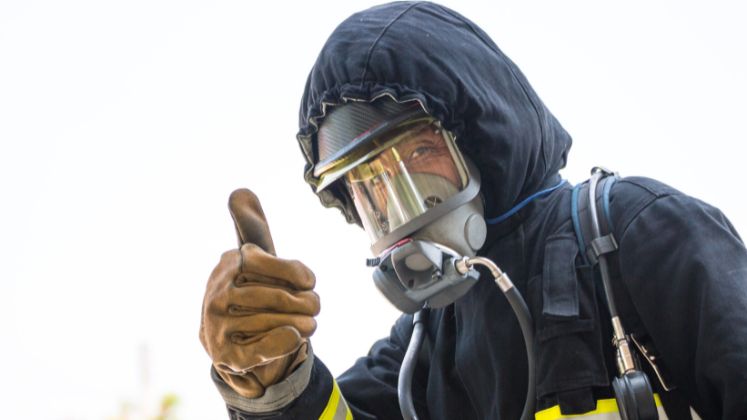
Smart textiles play a pivotal role in the creation of protective clothing and wearables for military personnel. This contains an array of essential items such as bulletproof vests, helmets, gloves and boots. Leveraging high-performance fibres and sophisticated textile structures, bulletproof vests, helmets etc., are engineered to deliver ballistic protection, impact resistance, fire resistance, chemical resistance and optimal comfort. The focus is on creating textiles that can help humans to endure extreme conditions.
Beyond personal protective equipment, protective textiles find application in the construction of military tents, shelters and camouflage systems. These textiles are characterised by their lightweight yet durable nature, designed to withstand the rigours of harsh environmental conditions. By offering reliable protection and support, these textiles prove invaluable in diverse operational scenarios, ensuring the safety and well-being of military personnel.
The top 10 militaries in the world have around 30 million military personnel and at least 4-6 metres of fabrics are required per person per year. India alone has 2.2 million soldiers in the army, while almost same number (2 million) works in police across the nation.
As per an estimate, the companies making garments for them see around 25 per cent – 50 per cent repeat orders for replacing the damaged or worn-out pieces every year. Camouflage and protection, secure locations and logistics (rucksacks bags) are three major areas where military textiles are used, as informed by Yogesh Gaikwad, Director of SDC International Limited.
Arvind Ltd.’s human protection business has an exclusive license from DuPont to manufacture Nomex branded fabrics and garments in India which are used in multiple protective clothing applications including defence, industrial workwear and firemen. The state-of-the-art printing and processing house of the company is able to offer a wide range of camouflage and IRR solutions as per varied customer requirement. “Following stringent specifications, the polyester and polyamide fibres are blended to sustain multiple wear while retaining the functional properties. Our fabrics range from 150-250 gsm in this segment,” mentioned Narinder Thapa, CBO – Human Protection Textile Division, Arvind Advanced Materials, who also shared that Arvind (AMD) produces around one million metre of fabrics per month. It also manufactures technical yarns for various applications using high performance fibres like Meta Aramid (Nomex), Para Aramid (Kevlar), Mod Acrylic, Polyester Super High Tenacity, FR Polyester, PTFE, Carbon, Anti-static and PBI.
Similarly, Texport Syndicate India Ltd. (TSIL) produces PVC fabrics that find applications in car covers, army truck covers and military uses. The Advanced Material Unit (AMD) of TSIL has recently put up a state-of-the-art factory in Surat which produces industrial coated fabrics. The coating machine installed in this unit is 90 metre long and has 3.2-metre width – this is considered one of the largest set-ups in the world with vertical heater facility. TSIL also produces around 150,000 protective clothing per month, while the capacity for producing industrial coated fabric is 4 lakh metres per month.
“Our fabrics come with various value additions like algae-proof, antimicrobial, anti-fungal, fire-resistant and temperature stability from -20°C to +55°C. The multispectral coating ensures camouflage and protection against radar detection,” informed Avinash Misar, Director and CEO of TSIL.
Camouflage is used not only to visually conceal military equipment but also protect soldiers in different kinds of terrains (such as desert, forest and snow). With the advancement in technology, the camouflage textile is required not just against visual but also against IR detection devices. Hence adding IRR technology to the same provides unique visual and spectral disguise.

Bullet-proofing through jackets and helmets
Bulletproof requirements broadly consist of three levels. One of these levels is NIJ 3A, intended for the common man facing common threats, such as state reserve police not in combat zones. These bulletproof jackets are designed for protection against normal pistol shots but not AK47 rounds. The second level is an advancement from NIJ 3A to NIJ 4, 5, 6. This classification includes both soft armors, made from fabrics like aramid and hard armors. The latter is a highly critical subject due to its weight, making it suitable for defence personnels in combat zones. There are certain finishes on certain fabrics that are conducted to enhance properties and functionalities of defence gears. Fabrics featuring ripstop construction incorporate reinforced grid patterns to prevent tears and resist abrasion. Further, Cordura® Fabric is known for its exceptional durability and abrasion resistance and TPU (Thermoplastic Polyurethane) Coating is also applied to fabric surfaces that provides enhanced abrasion resistance and durability while maintaining flexibility and breathability.
The bulletproof jacket fabrics are engineered to provide protection against projectiles, fragments and ballistic threats. Therefore, they are typically composed of high-performance fibres such as aramids, polyethylene or hybrids of both, woven or laminated together in multiple layers to create ballistic-resistant materials used in body armor, vehicle armor and protective gear for military and law enforcement personnel.
Meeting the requirements at the hard armor level is challenging, yet in India, efforts are underway to manufacture hard armor and advance bulletproof concepts.
“We’ve developed an innovative helmet designed to provide comprehensive protection to soldiers from hard steel ammunition in war zones. Our patented technology ensures a remarkable penetration level of 15 mm, surpassing the standard expectation of 20 mm. Indian army placed an emergency order for 15,000 units last year,” commented Major General Anil Oberoi, Defence President, SMPP Pvt. Ltd. – a leading defence textiles and gears manufacturer based in Delhi.
“Pre-pandemic, the army ordered 186,000 bulletproof jackets equipped with Level 3 frontal plates, capable of halting steel bullets. The recent new order placed with SMPP by the Indian army further enhances armour capabilities, addressing armour facing concerns. With orders from 45 countries, we contribute significantly to our defence exports,” commented Anil.
| As per the Indian government, fire services are facing a shortage of 503,365 firemen across the country and the country is gearing up to address this shortage. As a result, the demand for fire retardant clothing is slated to grow. |
Protection through high altitude clothing
The domestic market for high altitude clothing is expected to reach Rs. 1,273 crore by FY 24-25, as per Ministry of Textiles’ estimates. High altitude clothing is used for protection against extreme weather conditions like extremely low temperature, high velocity winds, snow fall etc., especially in critical combat areas like Siachen. The high-altitude clothing consists of jackets, waist coats, trousers, glacier caps, rappelling gloves and glacier gloves. The weight of special clothing is typically around nine to ten kilograms.
The major characteristics of high-altitude clothing are hydrophilic-waterproof and moisture resistant, breathable and abrasion resistance. Special finishes such as hydrophilic polyurethane coating, gore-tex coating or sympatex coating are required to produce textiles for high altitude clothing. DWR (Durable Water Repellent) Finish through lamination and membranes is applied to the outer surface of the fabric to make it water-resistant and windproof while allowing breathability. Insulation on high-performance synthetic fibres, such as polyester or polypropylene, is also used to create insulating layers that trap heat and provide warmth even when wet. The industry can also use thermal linings that’s done on fabrics with brushed or fleece linings that enhance thermal insulation by trapping heat close to the body. In 2017, two individuals – Rohit Bedi and Munish Hinduja, founded defence start-up AROO to focus on ‘Make in India’ high altitude clothing for the Indian army and to tackle the issue of the Indian army relying on imports for high-altitude gear. AROO conducts research on the products and then it collaborates with OEM Gokaldas Images, based in Bengaluru, to manufacture them.
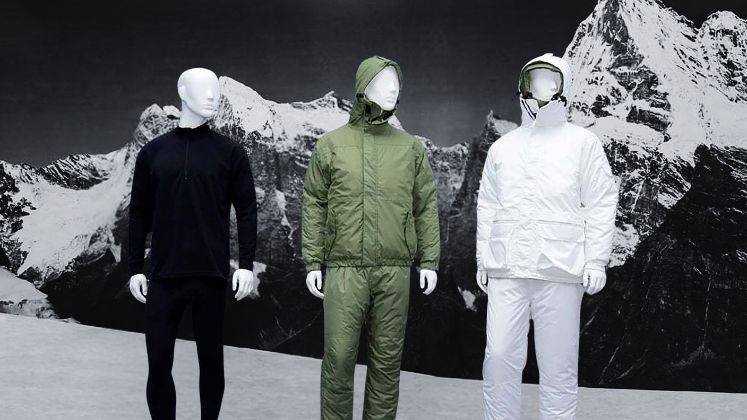
AROO’s first product was ECWCS (Extreme Cold Weather Clothing System) where it passed field trials in 2017. Explaining the technology behind ECWCS, Munish Hinduja, Co-Founder, AROO said that this clothing system has to meet two criteria. It needs to be waterproof under a certain pressure for a certain duration of time and has to provide a certain warmth level to the soldier at sub-zero temperature from -20°C up to -50°C. The clothing system should also be able to protect the wearer from winds that can go up to 50-60 km an hour.

Hinduja further explained that an ECWCS set is a 3-layered 6-garment system (3 jackets and 3 trousers) worn together. The first layer, closest to the skin, is a knitted fleece layer to keep the wearer warm; the second layer is to sustain the person in temperatures of about -25°C; and the third layer is the white or camouflage layer.
“We have completed two contracts for the Indian army, with another one potentially on the way. However, the demand is not constant and there’s no guaranteed commitment from the Indian army. Each time, we have to participate in a competitive tender and the contract is awarded based on factors like pricing and quality,” informed Munish, adding, “So far, AROO has produced over 120,000 sets, each containing 6 garments and each set is averagely priced at Rs. 18,000 which is at least 30 per cent cheaper than imports.”
Troop Comforts, a 100 per cent Ministry of Defence initiative in technical textile division in Kanpur, produces engineered high altitude clothing for the Indian armed forces. Its two-layered jacket is suitable for high altitude combat operations under cold climate at 14,000 feet at temperature up to -20°C and wind velocity of 40 km/hr. According to Atul Gupta, Former Board of Member and Director of Operations at Troop Comforts Ltd., the jackets are water-proof, wind-proof and have breathable outer layer with added insulation, whereas the inner layer helps to keep body dry and comfortable. These jackets do have thermal insulation value (TIV) of 4.50 Clo approximately.
Applications of technical textiles in armed forcesBody Armor These textiles can seamlessly incorporate sensors that monitor vital signs, environmental conditions and even provide real-time communication. The ability to integrate electronic components directly into the fabric enhances mobility while maintaining the necessary protective features. Climate-Adaptive Clothing Smart textiles have the capability to adapt to changing environmental conditions. For armed forces operating in diverse climates, this technology can regulate temperature and humidity, ensuring optimal comfort for soldiers. Adaptive clothing can reduce the risk of heat-related injuries and enhance overall performance. Health Monitoring and Injury Prevention Embedded sensors in smart textiles can monitor the health of military personnel in real-time. This includes tracking fatigue levels, detecting injuries and assessing overall well-being. Rapid response to potential Applications in civilian forces and law enforcementPolice Uniforms with Communication Capabilities Smart textiles can be integrated into police uniforms, providing officers with communication devices and real-time data analysis. This connectivity enhances coordination during operations and facilitates swift responses to emerging situations. Search and Rescue Operations Civilian forces involved in search and rescue operations can benefit from smart textile technology. Garments equipped with GPS tracking, environmental sensors and communication tools can improve the efficiency and safety of rescue missions, especially in challenging terrains. Firefighter Gear with Thermal Sensing Firefighters face extreme conditions and smart textiles can offer enhanced safety. Garments equipped with thermal sensors can alert firefighters of potential dangers, ensuring a more effective and safer response to emergencies. |
Protective textiles for industrial workwear and firemen
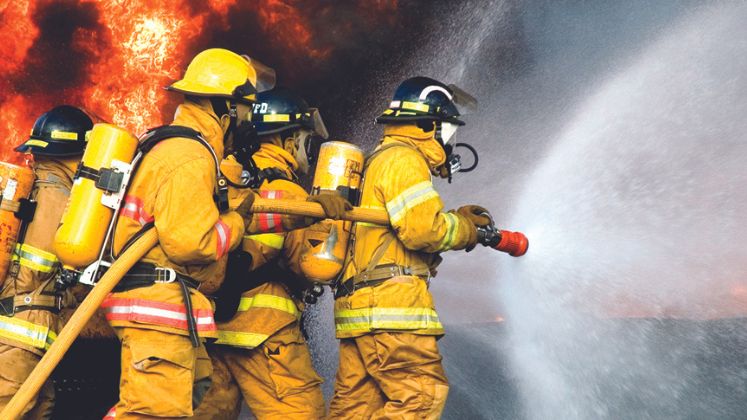
The global fire-retardant textile market is projected to grow from US $ 3.50 billion in 2023 to US $ 4.80 billion by 2027. Approximately 30 Indian companies are producing high-end flame-retardant fabrics (both for domestic and export markets) that are engineered materials designed to resist ignition, slow down the spread of flames and reduce the risk of injury or damage in the event of a fire. These fabrics find applications in diverse sectors, such as industrial manufacturing, military, firefighting, oil and gas, mining, chemical, etc.
The flame-retardant apparel can be manufactured from two varieties of fabric – 100 per cent cotton fabric with flame retardant coating or fabric made of inherently flame-retardant fibre. Understanding the level of protection that flame-resistant (FR) textile should provide is crucial when producing it. Effectively minimising heat transfer can substantially mitigate the impact of a fire or arc flash, offering significant protection to the wearer. Arc ratings are measured in calories per square centimetre, with higher ratings indicating increased protection.

DuPont, FRAI, Arvind Advanced Material Division (AMD), Texport Syndicate, Sai Synergy, Mallcom, Tarasafe International, Kay Tent and Access Textiles are some of the leading names in the Indian fire-retardant textile manufacturing industry.
Gurgaon-based Sai Synergy LLP produces fire resistant clothing made of 100 per cent cotton ring spun yarns and treated with FR chemical Pyrovatex® CP New (Huntsman Germany). The company uses unique fibre blends using inherently flame-resistant fibres such as Mod acrylic (Waxman), DuPont – Nomex, Meta aramid and Para aramid fibres (Kevlar) that give the end result in the form of FR clothing that is skin safe, chemically stable and has flame resistant properties that are said to be effective for the life of a garment, regardless of the number of wash and wear cycles.
| Types of high-tech fibres used in protective textile production
Protective textiles are designed to provide specific functionalities such as resistance to heat, flame, chemicals, abrasion and other hazards. Various types of fibres are used in the production of protective textiles to meet specific requirements in different applications. Here are some common types of fibres used: Aramid Fibres • Examples: Kevlar®, Nomex® Polybenzimidazole (PBI) • Example: PBI® Polyethylene Fibres • Examples: Dyneema®, Spectra® Polyester Fibres • Examples: Twaron® (para-aramid), Technora® (aromatic copolyester) Nylon Fibres • Example: Nylon Modacrylic Fibres • Example: Protex® Carbon Fibres • Example: Carbon Polyvinyl Chloride (PVC)- • Properties: Water-resistant, chemical-resistant and durable Flame-Resistant Cotton • Properties: Treated to be flame-resistant High-Performance Fibres • Example: Zylon These fibres can be used individually or blended to achieve a combination of properties, depending on the specific requirements of the protective textile application. |
“We produce around 200,000 pieces of protective clothing per annum for customers in oil and gas industries in India and overseas market. We do not have spinning facility in-house but we do procure best of fabrics to produce these protective clothing,” told Tanmay Singhal, Director, Sai Synergy LLP.

Mallcom India, a leading industrial safety equipment manufacturer in India, has recently opened a new state-of-the-art protective textile manufacturing facility in Ghatakpukur, West Bengal. The company has also inaugurated its workwear manufacturing unit in GIDC, Ahmedabad (Gujarat) with projected capital outlay estimated at Rs. 50 crore. Sharing the details of the expansion, Ajay Mall, Managing Director, Mallcom India, commented, “We are making all kinds of products that fall under workplace safety using high-end technical fabrics and trims that have properties such as FR, anti-static, chemical resistant and high-visibility.”
Arvind Human Protection division produces over 10 million metres of fire-retardant textiles per annum. “Our in-house PU bi-layer and tri-layer lamination process provides a barrier against wind, water, chemicals, microbes and harmful vapours present in the environment while allowing perspiration to escape while maintaining fabric stretchability,” mentioned Narinder.

Common finishes used in flame-retardant clothing / textiles
Flame Retardant Finishes
- Phosphorus-Based Flame Retardants: Phosphorus compounds are commonly used as flame retardants in textiles due to their ability to inhibit combustion and reduce flame spread.
- Halogen-Free Flame Retardants: Environmentally friendly alternatives to traditional halogen-based flame retardants, such as phosphorus-based compounds, are gaining popularity for their reduced environmental impact.
- Inherent Flame Resistance: Fabrics made from inherently flame-resistant fibres, such as meta-aramid, para-aramid and modacrylic, offer permanent flame resistance without the need for chemical treatments.
Heat Resistant Finishes
- Ceramic Coatings: Fabrics treated with ceramic coatings or infused with ceramic fibres offer heat resistance by reflecting radiant heat and providing thermal insulation.
- Aluminised Fabrics: Fabrics coated with aluminum provide heat resistance by reflecting radiant heat away from the body, making them suitable for applications requiring protection against high temperatures.
- Silicon Coatings: Silicon coatings enhance heat resistance by forming a heat-resistant barrier on the fabric surface, preventing heat transfer and ensuring comfort and safety in high-temperature environments.