


TCP/IP moved data, email moved messages, HTTP linked pages, PageRank ordered them and smartphones carried it all; containers, metric units, barcodes, GPS and public keys did the same for goods and trust. Each brought new trouble as it spread. Two filed inventions now propose missing layers: the 0→1 Doctrine checks AI acts inside a Governed Interval, and BBAT decides which data is kept.
LIVE www.0to1doctrine.com
THE SHORT VERSION
- The 0→1 Doctrine gives every requirement and every offer, whatever its unit or field, a position between 0 and 1, and allows an AI act only where both fit human-chosen limits.
- Band-Based Archive Triage (BBAT) decides, by rule, whether data is kept, deleted or put to work, and releases its value without revealing it.
- This article places both beside the metainventions that came before.
LIFE BEFORE THE LAYERS
A letter once took a week, a fax needed a second machine, a map was paper and a ledger was a book. A litre, a gallon and a barrel could describe the same oil. Every exchange needed people to translate, check and trust by hand.
LAYERS THAT MOVED INFORMATION
TCP/IP let any computer reach any other. Email, carried over SMTP, made a message almost free to send. HTTP and the web let a page in one country link to a page in another. None of these asked what the data meant, or whether it should travel; each simply moved it.
LAYERS THAT SORTED AND CARRIED
As pages multiplied into billions, PageRank used the web’s own links to judge which pages mattered most. Smartphones then put network, mail, maps, camera and payment into one pocket. Information stopped being a place people visited and became something they carried everywhere.
LAYERS FOR THE PHYSICAL WORLD
The same idea reshaped goods. The shipping container gave every cargo one box that fits any ship, train or truck. Metric units gave every measure one shared scale. Barcodes and QR codes gave every item a label any reader can scan, and GPS gave every place a signal anyone can use.
LAYERS FOR TRUST
Public-key cryptography let strangers check which key signed a message, once keys were tied to known owners. Relational databases and spreadsheets gave any record a common structure. Together they made it possible to trust a document, a payment or a figure produced far away, by someone never seen.
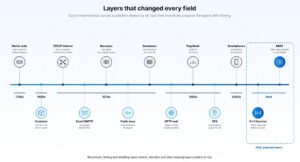
Figure 1. Metainventions that changed every field, and the two layers now added.
THE PAIN OF SHIFTING
None arrived smoothly. Rival standards fought before one won. Email brought spam and fraud. Search and smartphones traded convenience for privacy. Containers left old docks and dock jobs behind. Metric units took generations in some countries and are still not universal. Legacy systems resisted, and rules arrived years late.
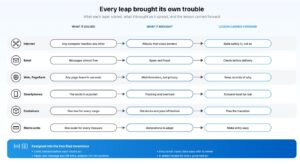
Figure 2. What each leap solved, the trouble it brought, and the lesson carried forward.
WHAT ALL OF THEM LEFT OPEN
Every layer moves, links, labels or ranks. None decides, before an act, whether that act should happen. None keeps a sealed record of why it happened. And none decides which data deserves keeping, so records pile up, cost power to store and leak when least expected.
THE AI MOMENT
AI now runs on all those layers at once, and agentic AI acts through them without waiting for a person. Share prices lurch on doubts over AI budgets, new data centres strain power grids, and rules are drafted in haste. The question has moved from whether AI can act to whether each act fits limits people chose.
A DECISION LAYER
The 0→1 Doctrine maps every measure, whatever its unit, to a position between 0 and 1, judged against the range accepted for it. Needs and capabilities become bands, human-set weights rank what matters, and legal and safety limits are checked on their own. Only when they hold may the act proceed, sealed in an Actuation Compliance Receipt.
A DATA-KEEPING LAYER
BBAT brings a common rule to stored data, much as the container did to cargo. Its first stage reads only metadata and marks data retain, purge or promote under the stricter applicable rule. Promoted data yields bands inside a secure vault, release needs three credentials, and every step is receipted.
ONE ORDER, THREE ERAS
Take online shopping. Once, buying at a distance meant catalogues, mail orders and weeks of waiting; the web, card payments and tracked parcels cut it to days. When the two inventions are applied, buyer needs and seller stock would meet as bands before dispatch, receipts would seal each sale, and records would be sorted by rule. Returns, dead stock, disputes and waste could all shrink.
OLD LESSONS, BUILT IN
Both inventions carry earlier lessons forward. The barrier to entry is low: tokens can travel by QR code, text message or paper, and adapters link older software. Privacy is designed in: only bands travel, and the temporary working copy is erased under Delete-Before-Share. Values are never hard-coded; authorities and users set them.
WHERE THE VALUE LIES
The internet, email and smartphones made each message, search and sale cost less. These two inventions are designed to cut the cost of errors, audits and idle data: fewer wrong actions, disputes narrowed to what a receipt shows, storage freed by purging, and new income from idle data via Dark Data Monetisation Without Exposure (DDME).
WHERE THEY STAND
TCP/IP, HTTP and the container each earned their place through years of use. The 0→1 Doctrine and BBAT are filed with that same reach in mind; only adoption will show how far they travel. They do not replace the network, the phone or the database; they offer a layer between information and action, and between data kept and data used.
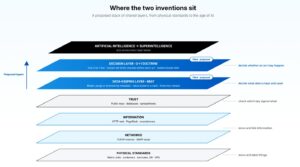
Figure 3. Where the two inventions would sit in the stack beneath Artificial Intelligence.
BEFORE SUPERINTELLIGENCE
Every earlier leap wrote its safety rules after the damage. Artificial Intelligence, then AGI and Superintelligence, may outpace rules; some foresee a singularity. A layer of limits set by people, checked before each routed act and sealed after it, is designed to be in place before the leap, not after.
QUICK ANSWERS
Do the inventions replace today’s networks or apps?
No. They are designed to sit above them. Networks, phones and databases keep working; the Doctrine adds checks before AI acts and receipts after, and BBAT decides which data is kept, purged or put to work.
Why compare them with earlier metainventions?
Each of those solved a problem shared by every field, the same reach these two are designed for.
Who sets the limits AI must keep?
The people and authorities responsible for each decision; the inventions check and record those limits.
Can either work alone?
Yes. Each stands on its own; together they cover the act and the data behind it.
CLOSING NOTE
- Wires carried words, links carried pages, phones carried people; the next layer can carry limits, keeping each routed AI act where humans allow.
LIVE www.0to1doctrine.com
This can be tested, live, via API, governed against ungoverned, side by side.
THE INVENTOR
Vatsal Soin is a systems theorist, inventor and serial entrepreneur with grants in the US, Japan, India and further jurisdictions, and filings on six continents; his most recent grant, for AI footwear, came in August 2026. His inventions span footwear, apparel fit, Sharable Size Cards, digital twins, robotics, governed global data, archive triage, quantum-resilient cryptography and AI governance. An SIM–RMIT and NTU alumnus, he sees every earlier invention as a step toward 0→1.
SELECTED REFERENCES
Granted: US Patent 12,446,652 B2 · Japan Patent 7560909 · India Patents 454081 and 599317. Filed: PCT/IN2025/051943 · US 19/489,595 · India 202511115781 · Australia AU2022450649 · India 202611113867 (23 September 2026) · PCT/IN2026/052042 (1 October 2026).
DISCLAIMER
Informational only. Not certified. No endorsement implied. Not investment advice. Examples are illustrative, not field results. Vatsal Soin · © 2026 All Rights Reserved.