

Gartner Survey Finds Majority of Chief Supply Chain Officers Unclear on AI Investment Returns
“Organizations are getting better at executing change for individual initiatives,” said Lorraine Gavin, Senior Principal Analyst in Gartner’s Supply Chain practice. “The bigger challenge today is deciding where to invest limited change management resources so that they support the business outcomes that matter most. AI is making that decision more important than ever.”
Gartner surveyed 394 supply chain professionals from organizations with annual revenue of at least $250 million between November 2025 and February 2026, to determine the allocation of their organizations’ digital investments. To document supply chain AI use cases and clarify the ROI of these activities, Gartner surveyed 135 senior supply chain leaders from January through April 2026.
Rapid AI evolution is causing use cases to proliferate faster than organizations can develop effective change management approaches to support them. Gartner research distinguishes between change methodologies and change strategy.
While change methodologies provide the steps and activities used to execute change for individual initiatives, a change strategy establishes how finite change management resources should be allocated across AI initiatives to achieve broader supply chain and enterprise objectives.
CSCOs should establish an AI change strategy that aligns change investments with business outcomes and protects AI investments from fragmented adoption (see Figure 1).
Figure 1: Change Methodology vs. Change Strategy
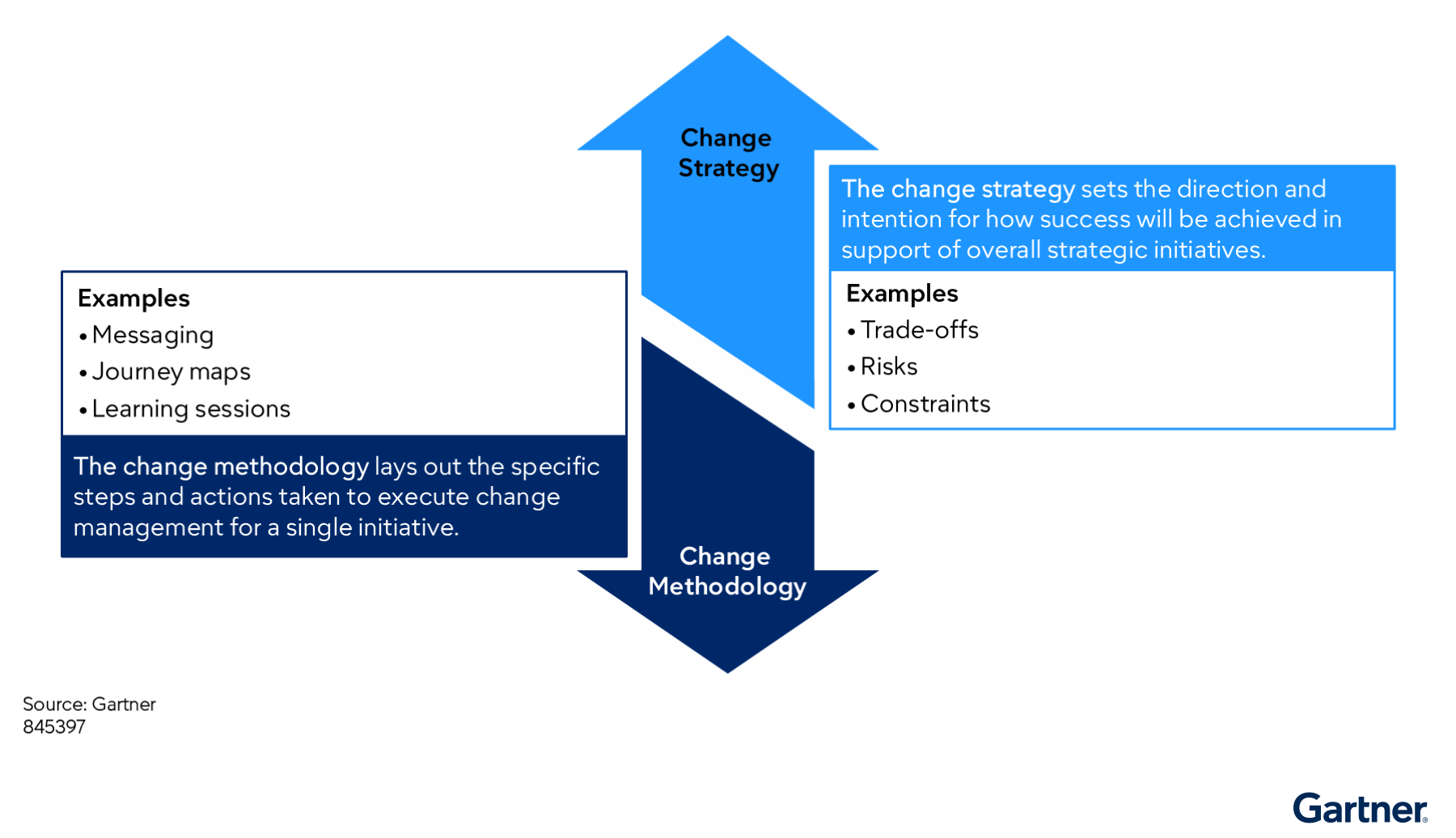
Source: Gartner (August 2026)
Rightsized Change Management to Double ROI
According to Gartner research, CSCOs seeking to improve their organizations’ AI outcomes should:
- Establish a Formal AI Change Strategy: Institutionalize AI change management as a distinct strategic discipline that supports the organization’s AI technology strategy and creates a foundation for intentional, outcome-driven execution.
- Prioritize and Allocate Change Resources Strategically: Treat change management capacity as a scarce resource and concentrate investment on high-value AI initiatives with the greatest potential to drive supply chain outcomes and ROI.
- Adopt a Composable Approach to Change Execution: Define different change approaches based on the scale, speed and organizational context of each initiative, rather than relying on a single standardized methodology.
- Build AI Change Leadership Capabilities: Develop leaders with business acumen, workforce development expertise and risk management capabilities so they can effectively guide AI-enabled transformation.