

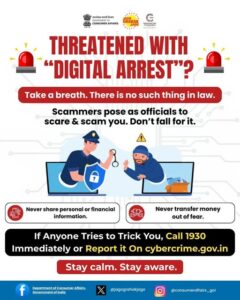
If someone threatens you with a fake “digital arrest,” don’t panic—real law has no such thing; scammers use fear to steal your details or money, so stay calm, don’t share anything, and call 1930 or report it on cybercrime.gov.in.
Digital arrest scams are rapidly emerging as one of the most dangerous forms of cyber fraud targeting internet users, professionals, senior citizens, and business owners worldwide. Cybercriminals are exploiting fear, panic, and confusion by pretending to be law enforcement officers, government officials, telecom regulators, or cybersecurity investigators. Victims are falsely accused of crimes such as money laundering, drug trafficking, tax fraud, illegal online activities, or suspicious bank transactions and are then psychologically pressured into transferring money or sharing sensitive information.
The rise of digital communication platforms, video calls, AI-generated voices, and spoofed phone numbers has made these scams increasingly convincing. Fraudsters create a sense of urgency and isolation, forcing victims to stay connected on calls for hours while pretending that they are under “digital surveillance” or “digital arrest.”
Understanding how digital arrest scams work and learning how to recognize warning signs are essential steps toward protecting personal and financial security.
What is a Digital Arrest Scam?
A digital arrest scam is a cyber-enabled fraud technique in which criminals falsely claim that the victim is under investigation or has been digitally detained by authorities. Scammers typically impersonate:
- Police departments
- Cybercrime officials
- Telecom authorities
- Customs officers
- Tax investigators
- Central investigation agencies
- Bank compliance departments
Victims are threatened with:
- Immediate arrest
- Passport cancellation
- Bank account freezing
- Legal action
- Public exposure
- Asset seizure
The scammers then manipulate victims into:
- Sending money
- Sharing OTPs and passwords
- Installing remote access apps
- Revealing banking details
- Transferring cryptocurrency
- Staying isolated from family or colleagues
How Digital Arrest Scams Work
1. Initial Contact
The scam usually begins with:
- A phone call
- WhatsApp call
- Video conference
- SMS message
- Fake legal notice
- Email impersonating authorities
The caller claims:
- Your mobile number is involved in illegal activity
- A parcel under your name contains illegal items
- Your Aadhaar or bank account was misused
- Your IP address was linked to cybercrime
- A financial complaint has been filed against you
2. Fear and Psychological Pressure
Cybercriminals create panic using:
- Aggressive language
- Fake case numbers
- Spoofed caller IDs
- Fake police uniforms during video calls
- Forged documents
- Threats of arrest within hours
They intentionally prevent victims from thinking calmly.
Common tactics include:
- “Do not disconnect the call.”
- “You are under digital surveillance.”
- “Do not inform anyone.”
- “Your bank accounts are being monitored.”
3. Fake Verification Process
Victims may be asked to:
- Show identity documents on camera
- Share Aadhaar or PAN details
- Verify banking credentials
- Download remote access software
- Transfer money for “verification”
Some scammers even conduct fake video interrogations lasting several hours.
4. Financial Theft
Eventually, the criminals demand:
- Security deposits
- Verification transfers
- Legal settlement fees
- Temporary fund transfers
- Cryptocurrency payments
Once the money is sent, the scammers disappear.
Why Digital Arrest Scams Are Increasing
Several factors are contributing to the rise of digital arrest scams:
Expansion of Digital Services
Online banking, remote work, and digital identity systems have increased exposure to cyber fraud.
AI and Deepfake Technologies
Scammers now use:
- AI-generated voices
- Fake video calls
- Automated scripts
- Social engineering tools
These technologies make impersonation more convincing.
Public Fear of Legal Authorities
Many people panic when they hear terms like:
- FIR
- Cybercrime
- Arrest warrant
- Investigation
- Money laundering
Scammers exploit this fear.
Data Leaks and Personal Information Exposure
Cybercriminals often obtain personal details from:
- Data breaches
- Social media
- Leaked databases
- Public records
This allows them to personalize scams.
Warning Signs of a Digital Arrest Scam
Understanding red flags can help prevent financial loss.
Unsolicited Calls from “Authorities”
Real law enforcement agencies generally do not conduct arrests or investigations entirely through phone or video calls.
Pressure to Act Immediately
Scammers try to create urgency so victims do not think rationally.
Requests for Money Transfers
Government agencies never ask people to transfer money to “verify innocence.”
Demands for Secrecy
Fraudsters isolate victims to stop them from seeking help.
Threats and Intimidation
Aggressive tactics are commonly used to trigger panic.
Requests to Install Apps
Remote access apps can give scammers control over devices and banking applications.
How to Stay Safe from Digital Arrest Threats
Stay Calm
Fear is the primary weapon used by scammers. Never make decisions in panic.
If someone claims:
- You are under arrest
- Your account is linked to crime
- Your number is under investigation
pause and verify independently.
Never Share Sensitive Information
Do not share:
- OTPs
- Banking passwords
- Aadhaar copies
- PAN information
- Credit card details
- Internet banking credentials
Legitimate authorities will not ask for such details over calls.
Verify Officially
If you receive suspicious communication:
- Disconnect the call
- Contact the official department directly
- Use verified government websites or official helplines
Never trust phone numbers provided by the caller.
Avoid Installing Unknown Apps
Fraudsters often request apps that allow:
- Screen sharing
- Remote control
- Banking surveillance
Only install trusted applications from official app stores.
Enable Strong Cybersecurity Practices
Use:
- Multi-factor authentication
- Strong passwords
- Antivirus protection
- Updated operating systems
- Secure Wi-Fi networks
Cyber hygiene reduces overall risk.
Educate Family Members
Senior citizens and less tech-savvy users are frequent targets.
Teach family members:
- Common scam tactics
- Verification methods
- Importance of not sharing OTPs
Awareness is the strongest defense.
What To Do If You Become a Victim
Immediately Contact Your Bank
If money was transferred:
- Freeze accounts if necessary
- Block suspicious transactions
- Change passwords immediately
Report to Cybercrime Authorities
Report incidents to:
- National cybercrime portals
- Local police
- Banking fraud departments
Quick reporting increases recovery chances.
Disconnect Compromised Devices
If remote access apps were installed:
- Disconnect internet access
- Remove suspicious applications
- Run antivirus scans
- Reset passwords
Monitor Financial Activity
Watch for:
- Unauthorized transactions
- New account openings
- Suspicious emails
- Credit misuse
Role of Organizations and Governments
Governments, banks, telecom operators, and cybersecurity companies must work together to combat digital arrest scams through:
- Public awareness campaigns
- AI-based fraud detection
- Stronger telecom verification
- Faster fraud reporting systems
- Cybersecurity education programs
Businesses should also train employees to recognize social engineering attacks.
The Future of Digital Fraud
Digital arrest scams are part of a larger trend of AI-powered cybercrime. As criminals adopt advanced technologies such as deepfakes, voice cloning, and automated phishing systems, cyber awareness becomes increasingly important.
Future threats may involve:
- Realistic AI-generated video impersonation
- Fake virtual court hearings
- Synthetic identities
- Automated psychological manipulation campaigns
Individuals and organizations must continuously adapt to evolving cyber risks.
Conclusion
Digital arrest scams demonstrate how cybercriminals exploit fear, technology, and human psychology to steal money and sensitive information. These scams are becoming more sophisticated, making public awareness and cybersecurity preparedness essential.
People should remember that legitimate authorities do not demand money transfers, secret communications, or immediate financial settlements through phone calls or video conferences. Staying calm, verifying information independently, and following strong cybersecurity practices can significantly reduce the risk of becoming a victim.
In the digital age, awareness, critical thinking, and cyber hygiene are among the most powerful tools for protecting personal and financial security against evolving online threats.
|
Your Trusted Partner for Laptop and Desktop Sales & Services Sri Global Care Plus Pack – Laptop Warranty Service Contact: 040 666 26 777, 81255 26777 e-mail : sriglobalsec@gmail.com |