

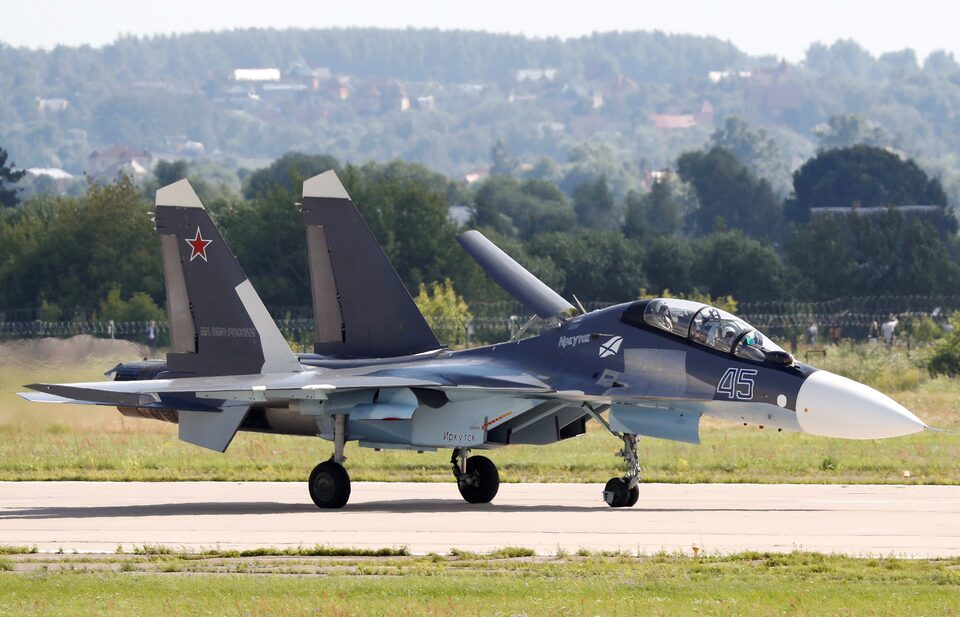
The conflict in Ukraine highlights the ascendancy of drones on the modern-day
battlefield. The age-old General’s dilemma of ‘what’s on the other side of
the hill’ can now be answered by a rifleman. But as technology
continuously reshapes the way we fight our wars, guided glide bombs are
answering another set of questions about how we fight wars. In a world
where stand-off means survival, glide bombs offer the delivery of relatively
inexpensive weapons on targets keeping delivery platforms considerably
out of harm’s way by virtually eliminating the exposure of the delivery
platform from the air defence systems near the target. Let’s have a look at
the brief history of these weapons and what’s India doing in this space.
Glide Bombs A Brief History
The Germans were the first to use guided glide bombs during the Second
World War. In 1943, after the capitulation of Italy, Germany sank the Italian
battleship Roma and damaged the battleship Italia. The bombs were also
successfully used to hit British battleship HMS Warspite and also damaged
light cruisers USS Savannah, USS Philadelphia and HMS Uganda.
The United States prolifically used the Walleye series of TV-guided glide
bombs to target key infrastructure projects such as bridges and
power plants in Vietnam keeping delivering aerial platforms away from
some of the most well-defended air-defence zones at that time.
Glide Bombs Today
Many modern-day glide bombs, unlike systems from the past, are add-on
kits such as the American Joint Direct Attack Munition-Extended Range
(JDAM-ER), the Russian UMPK guidance kit, or the Pakistani Takbir kit.
This economically feasible approach makes a dumb bomb smarter by
adding a glide cum guidance kit onto the bomb. There are many other
systems such as the American GBU-53/B Storm Breaker, AGM-154 Joint
Standoff Weapon (JSOW), GBU-39/B Small Diameter Bomb (SDB) and the
German HOPE/HOSBO.
The Russian bombs have caused a lot of damage in Ukraine with the
country’s president seeking help from his allies to end the scourge. Ukraine
has also complained that the Ground Launched Small Diameter Bomb
(GLSDB) launched from either the M270 or the HIMARS rocket systems is
rendered useless due to Russian jamming.
India Keeping Abreast
India has developed two different types of glide bombs. The first being the
DRDO Smart Anti-Airfield Weapon (SAAW). This weapon can glide to a
range of 100 km. The SAAW was designed to destroy targets, such as
runways, bunkers, aircraft hangars and other reinforced structures. The
other type of glide bombs that India will employ in a future conflict are
Gaurav and Gautham. Gaurav is a 1,000 kg bomb with a maximum glide
range of 100 km and Gautham is a 550 km bomb with a range of 30 km. A
range extension kit is in the pipeline for Gautham, which for now has
steerable fins to guide it to a target. India also uses the Israeli Spice series
and the French Hammer bombs which can glide to their targets. India used
the stand-off Spice bombs during the Balakot raid.
Spread the love