

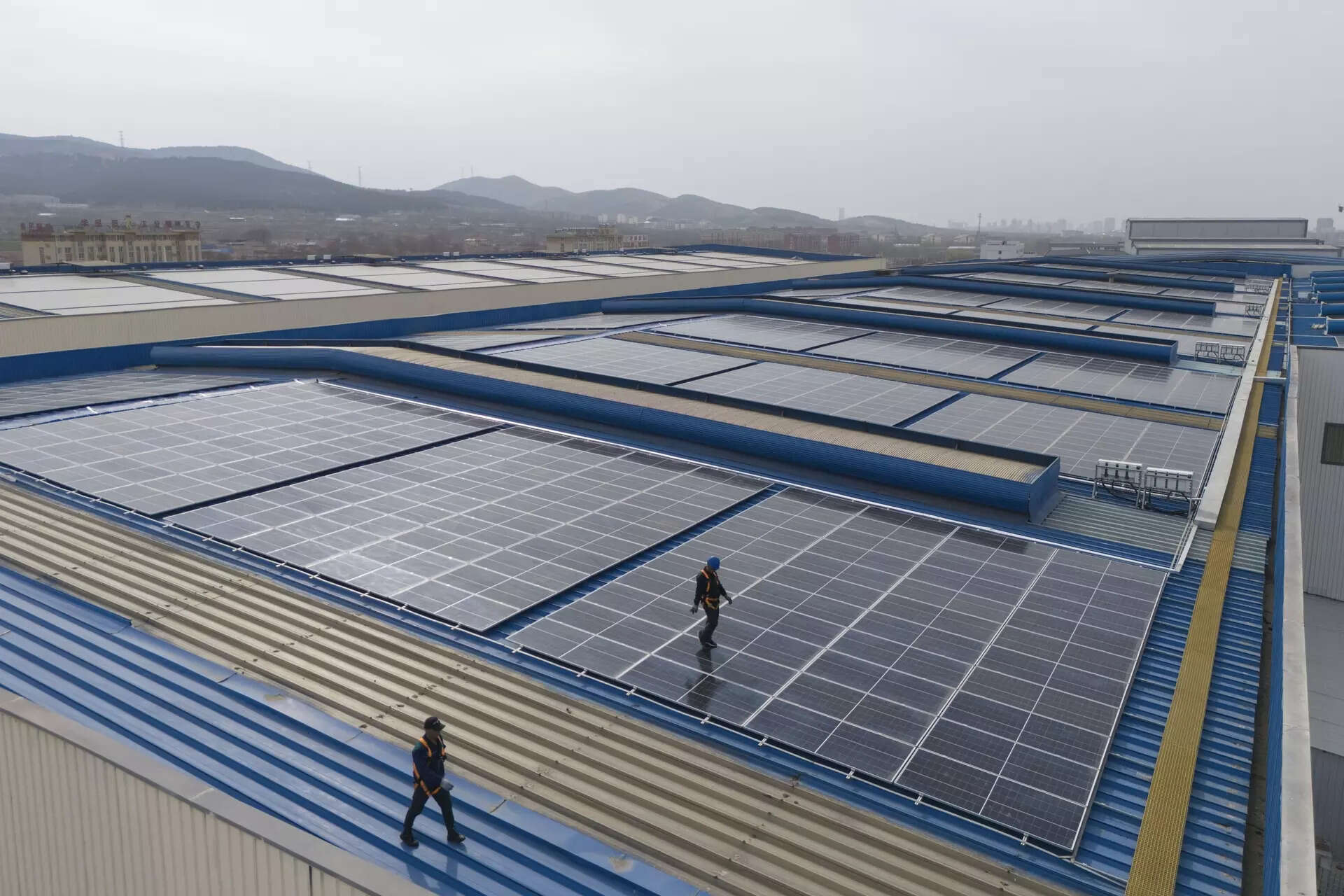
India’s nationally determined contribution (NDC) target has been updated to achieve 50% cumulative electric power installed capacity from non-fossil fuel sources by 2030. It also calls for reduction in the emission intensity of its gross domestic product by 45% till 2030 from 2005 level. To achieve these targets, the Micro, Small, and Medium Enterprise (MSME) sector, which contributes to 25% of the total industrial energy consumption, becomes a key focus area. As per a report by the Foundation for MSME Clusters and Deutsche Gesellschaft für Internationale Zusammenarbeit GmbH (FMC and GIZ, 2018), the MSME sector has a thermal energy consumption of approximately 85% and is heavily dependent on fossil fuels for its energy needs. Moreover, only a small share of the electricity requirement is met through renewable sources (such as rooftop solar photovoltaics).Many MSMEs, particularly textiles, bakeries, food-processing units, pharmaceuticals, pulp and paper industries, and chemical industries, require heat for various processes. This heat requirement mainly lies in the low temperature range (fossil fuels is high. In the absence of waste heat recovery or preheater systems, MSMEs consume more fuel to raise the feedwater temperature. In this regard, solar thermal technologies could provide an innovative solution.What are solar thermal technologies?
These systems collect incoming solar radiation using mirrors or reflectors and focus it on receivers, resulting in very high temperatures. Most systems include a heat-transfer fluid that is heated and circulated through the receiver and used to generate steam. This steam is either used for thermal heating or passed through a turbine to generate electricity. Solar thermal technologies also employ tracking systems to focus the sunlight on the receiver as the sun’s position changes through the day. The technology is classified into concentrating and non-concentrating collectors of various types, functioning between a temperature range of 50°C and 900°C. Concentrating solar thermal (CST) technologies are most commonly used and divided into four major types: parabolic trough, linear Fresnel reflector, solar power tower, and solar dish. Non-concentrating collectors include flat-plate and evacuated-tube collectors and have limited lower-temperature applications.Technology implementation
CST technologies can be used as a substitute or a hybrid system in MSMEs to significantly reduce their fossil fuel dependency. The following applications of this technology can be considered to ensure a substantial impact in the sector.
First, existing boilers can be replaced with CST technologies, such as parabolic trough collector or parabolic dish reflector (PDR) systems, which can generate steam at the required temperature (
Second, evacuated tube collectors or smaller PDRs can be used as a preheating system to raise the feedwater temperature from 25°C to 80–90°C. Implementing this system in tandem with the existing boilers could considerably reduce the amount of fuel used. These systems are cost-effective and modular, making them feasible as preheater systems in micro- and small-scale industries.
Third, large-capacity PDR or PTC units could function as a centralised steam generation system. This can be implemented in the design of new MSME clusters having an aggregated steam demand, making it a highly sustainable, efficient, and cost-effective option.
An opportunity ahead
Cost and efficiency are major concerns for implementing a new technology in MSMEs. The cost of steam generation using some CST technologies is lower than that using diesel and gas. The steam generation cost for PDR systems over 30 years is about INR 1.1/kg, whereas that for diesel and gas is about INR 6.03 and 4.69 / kg. The average thermal efficiency of PDRs is around 60% and can reach 90%, which is on par with that of boilers (60%). Although the system’s efficiency varies with the type of CST used, the advancement in this technology indicates its cost-effectiveness and efficiency.
The benefits to MSMEs include reduction in emissions and manufacturing costs as well as long-term sustainability. For example, PDR systems have been installed at Salem dairy for pasteurisation, saving ~14 tonnes of furnace oil annually. Further, six M90 parabolic dishes have been installed by a pharmaceutical company located in Hyderabad. The system provides 30,000 litres of hot water at 90°C, with a payback period of 3 years. It saves 200 kg of furnace oil consumption per day, reducing 9,000 tonnes of CO2 emissions over the project lifetime.
Capital subsidies, tax reductions, and affordable financing can promote the adoption of solar thermal technologies. Conducting workshops in targeted sectors can help build awareness on the technology, business case, and financing schemes. Although these systems have existed since the last decade, their development has been gradual. Considering this technology can be beneficial for MSMEs and help India achieve its NDC and net-zero targets, substantial measures are needed to drive its progress and widespread deployment.