

“Arguably, we can see that higher investment in technology is now paying greater productivity dividends for the United States while Australia more recently has been struggling to achieve real productivity growth.”
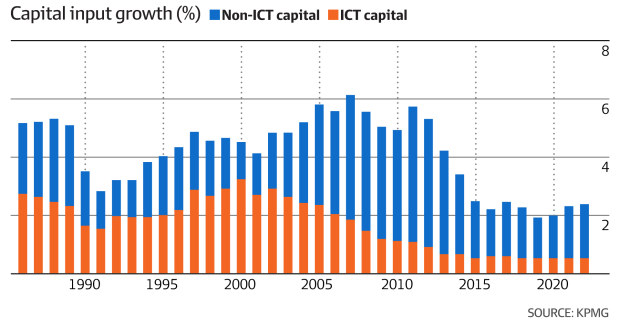
The Intergenerational Report released last year sounded the alarm on Australia’s long-term prospects, forecasting economic growth would slump from 3.1 per cent a year on average over the past 40 years to just 2.2 per cent a year on average over the next 40 years, smashing living standards.
Business Council of Australia chief executive Bran Black warned this week that chief executives were struggling to compete for global investment, making it more difficult to reverse the forecast decline. To reverse the trend, he called on federal Labor to do more to attract and encourage business investment.
Last week, Dr Chalmers told a BCA dinner at Parliament House in Canberra that Australia’s economy was “not productive enough, not competitive, and not dynamic enough” and without change, would “cost us”. Investment would be “the common ingredient in our success”, he said.
Dr Chalmers was more upbeat about Australia’s prospects, citing recent growth in business investment.
“We saw business investment grow 8.3 per cent last year [in nominal terms], it’s gone up every quarter of our time in office, and I still get a very steady flow of [Foreign Investment Review Board] applications across my desk,” he told business leaders.
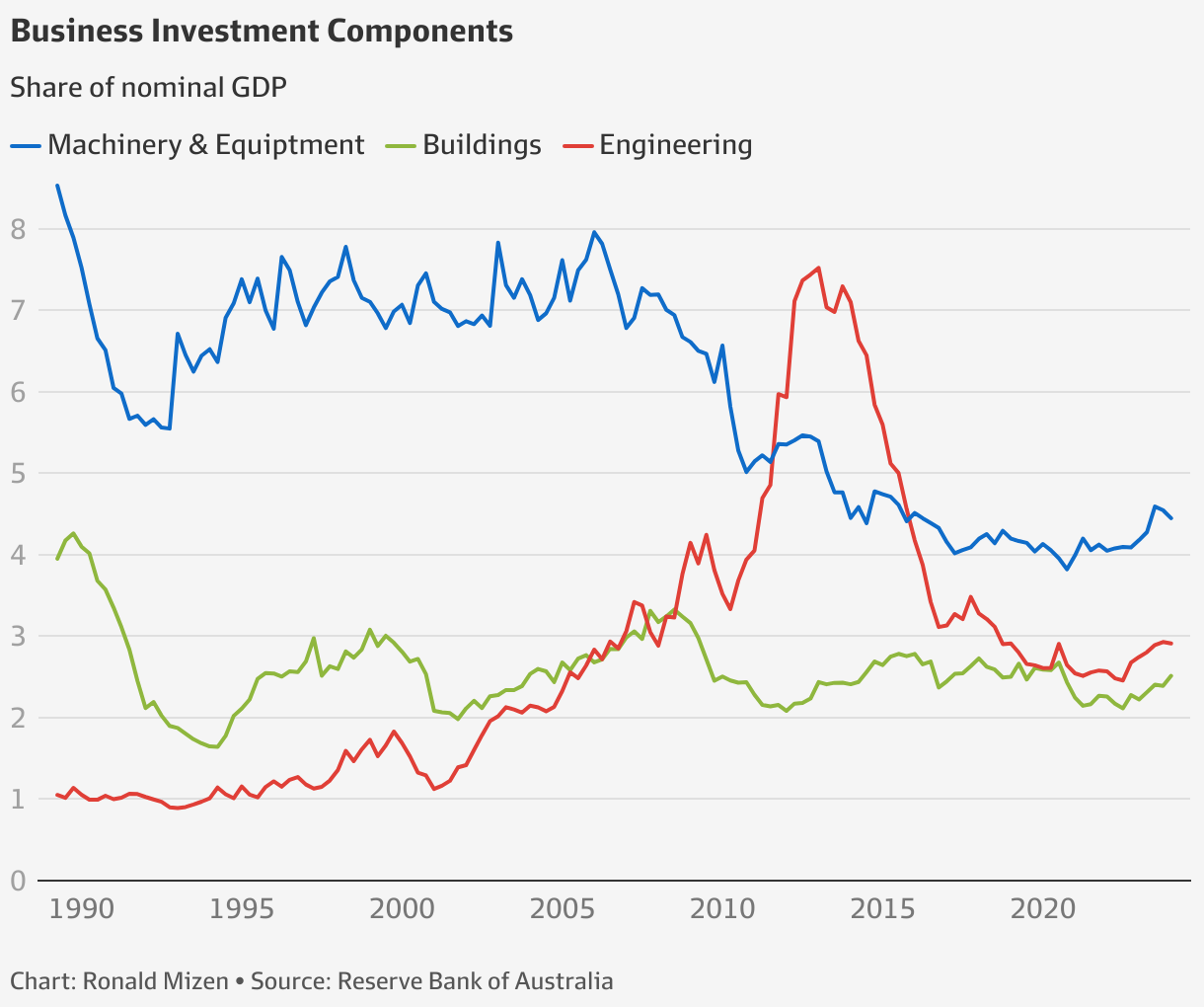
Spending on machinery and equipment among companies outside the mining sector surged between September 2020 and June 30, coinciding with the pandemic-era instant asset write-off.
Under the investment-friendly tax rules that came into effect amid the pandemic in October 2020, companies with an annual turnover of below $5 billion were able to deduct the full value of investments in the first year.
But as an overall percentage of the economy, spending has been stagnant.
Judo Bank economic adviser Warren Hogan said the overall picture was complex and subject to big structural shifts. He was also upbeat about the outlook for investment, which in nominal terms had held up well since the Reserve Bank began applying the economic brakes in mid-2022.
“The big picture, one of the themes of this cycle, and it will continue to be a theme of the next decade, is we are shifting from a consumer-led economy to a business-led economy,” Mr Hogan said.
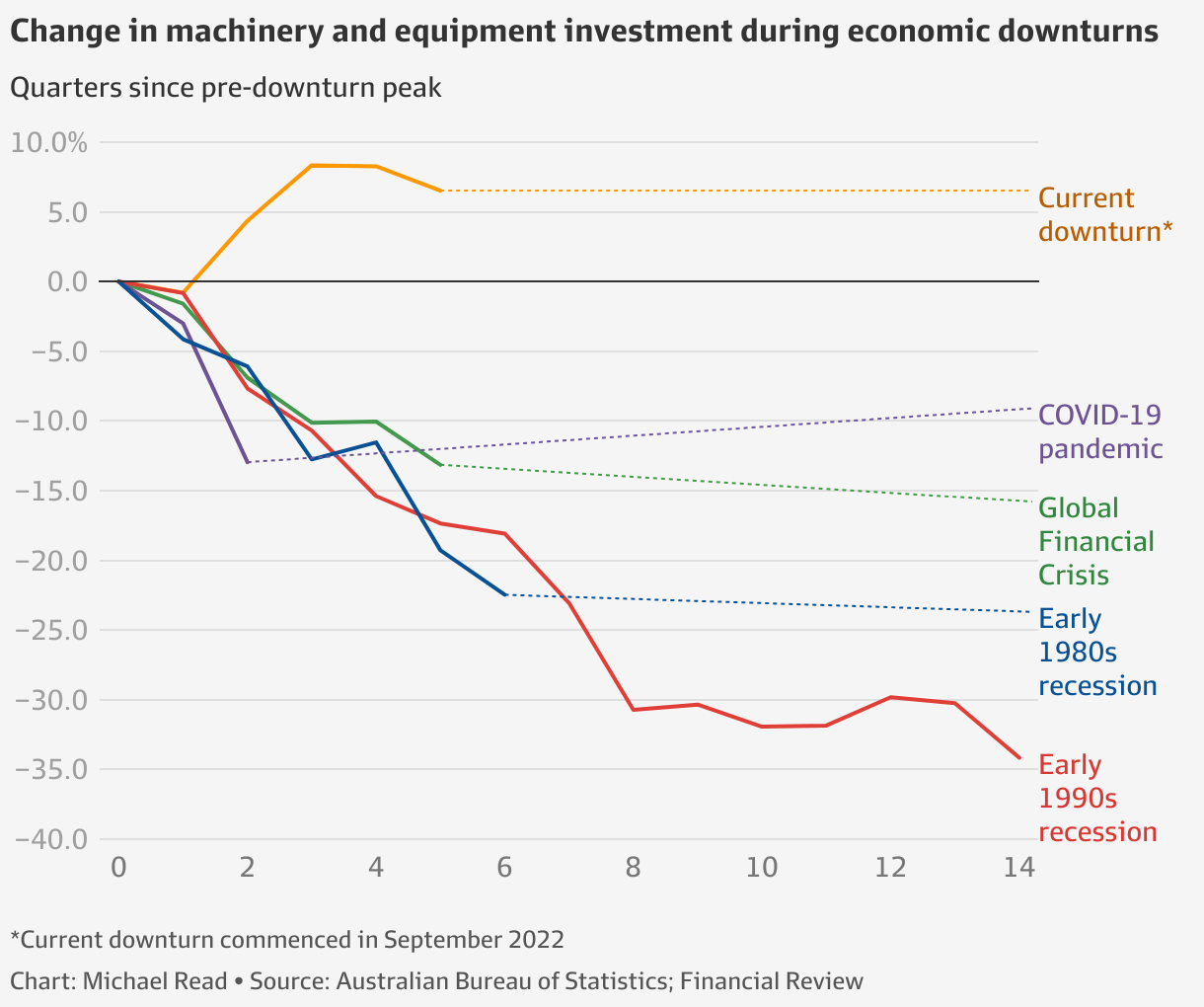
“Labour shortages are here to stay, they are reflective of a demographic shift and businesses are under pressure to invest in labour-saving technology. That will keep incentives to invest in plant, equipment, software, and AI.
“The energy transition is another one that will drive a portion of business investment, along with de-globalisation.”
He said that although the pandemic-era instant asset write-off policy had brought forward some investment, overall spending had held up remarkably well since it was removed in July 2023.