

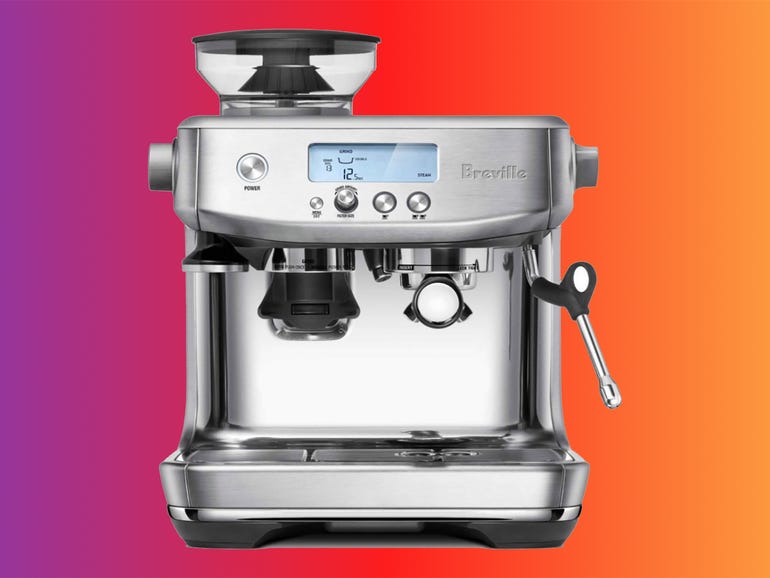
Espresso drinks at your favorite coffee shop or chain, such as Starbucks, can become an expensive habit, starting at around $4 per drink for a basic tall or grande cafe latte. If you drink at one of these per workday, that’s as much as a $1,200 per year habit based on 300 drinks a year! It may be time to consider your own espresso machine so you can save money and have more control over the quality and variety of your beans.
Cafe grade/commercial and some high-end prosumer espresso machines generally utilize a separate boiler for the coffee extraction than the steamer function. They frequently use a Faema E61-style group head (named for the year of its introduction, 1961) along with standard 58mm portafilters and baskets. These machines also usually incorporate a PID unit used to thermostabilize brew temperature to pull consistent espresso shots.
The cheapest E61-style single group head machines for home or small cafes use heat exchangers instead of a separate boiler for each function, use vibratory pumps, start at around $1400, and have higher wattage circuit requirements than a typical home kitchen appliance. The more expensive prosumer and cafe-grade machines use dual boilers and higher-quality and quieter rotary pumps.
The cost of these machines is separate from the cost of a burr coffee grinder which starts at around $200 and is needed to produce the fine, powdery, tightly packed grinds needed for proper espresso extraction. Because of the high costs of these prosumer setups, and the large variety and price points of machines and grinders in this category, we won’t be covering these here. If you are inclined to purchase a machine of this type, I suggest starting with specialist commerce sites such as Seattle Coffee Gear or Whole Latte Love.
Less-expensive consumer machines listed in this guide have improved at making espresso drinks and have become more reliable in recent years. However, they use smaller, nonstandardized group heads and portafilters than the E61, and in most cases, you will need a separate grinder. Additionally, most of the consumer machines on the market under $700 do not have PIDs. Still, some, such as the Rancilio Siliva and the Gaggia, can be retrofitted, allowing them to produce much more consistent shots approaching professional-level extractions. These retrofit kits can cost about $300 or higher, and some versions of these machines can be purchased with them already installed.
With all espresso machines, be sure to use filtered water rather than tap, as mineral deposits will reduce the lifetime of your machine or accelerate the need for maintenance. You should also de-scale your machine periodically if your water is especially hard, even after filtration.